88,183 people. 194 countries. $124M+.
And one industrial factory that shouldn't exist.
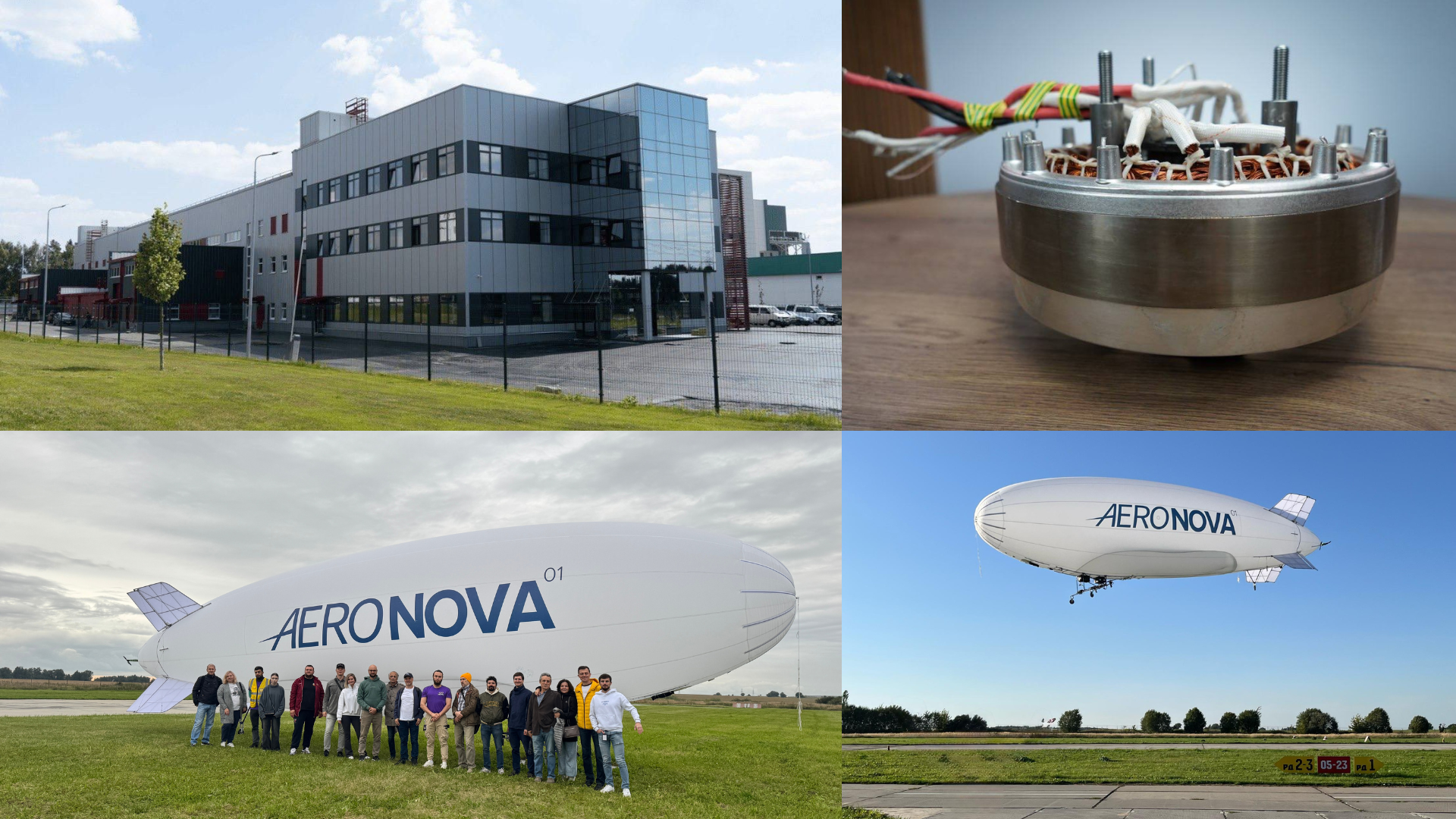
An investigation into a hybrid-funded industrial experiment that received a Russian Ministry license, built a 14,700 m² factory, and flew an airship at Dubai — while the venture world wasn't looking.
The Anomaly
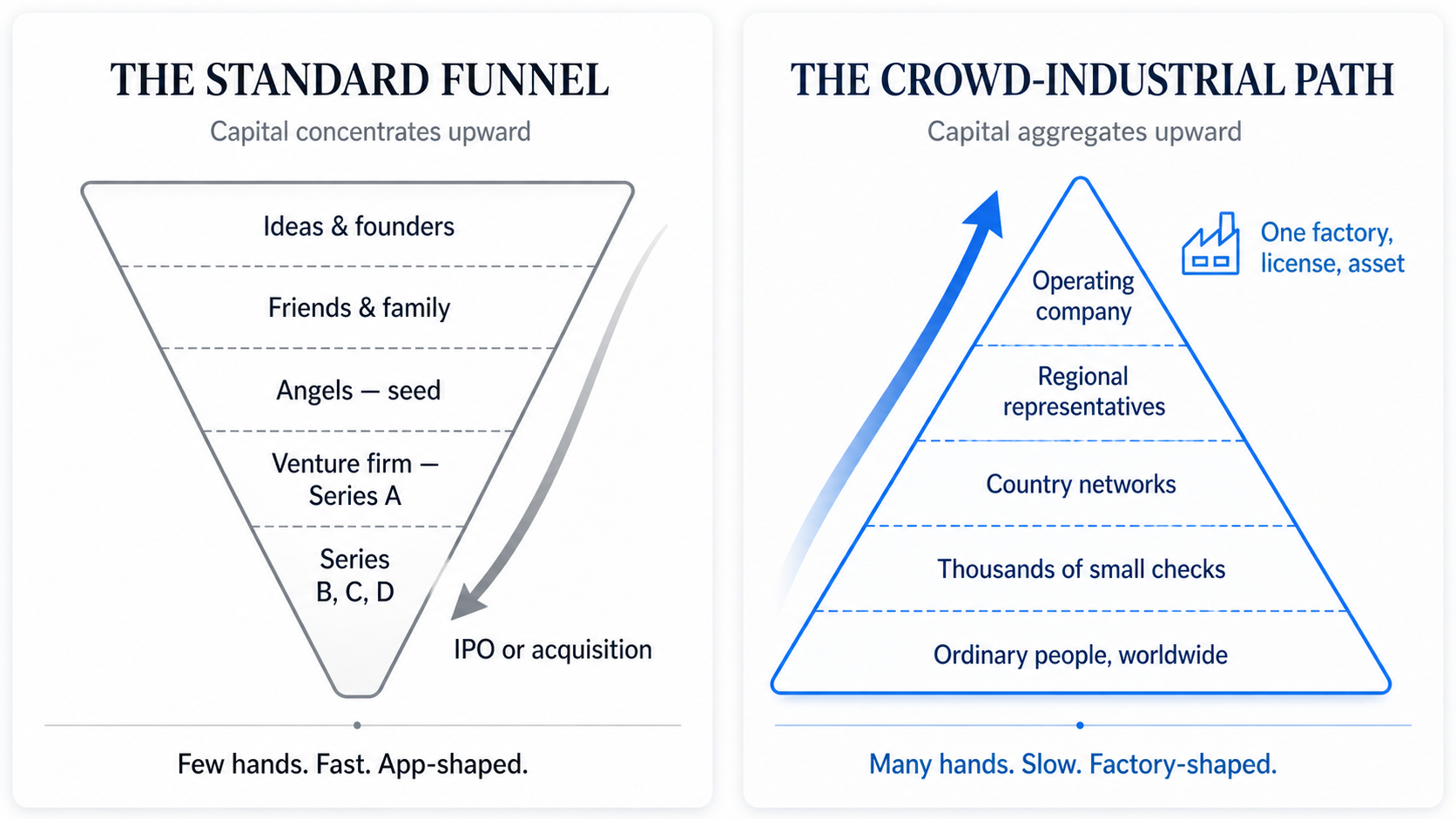
Every venture person knows the funnel. A founder has an idea. Friends and family put in the first ten thousand dollars. Angels come in for a seed round. A venture firm writes the Series A check. B, C, D follow if the company grows. Somewhere around the late stages, the company either goes public or gets acquired, and the early believers get paid.
This is how almost every technology company of the last fifty years has been built. It is the model that funded Google, Meta, Stripe, SpaceX, and roughly every name you can think of. It concentrates capital in very few hands, moves fast, and generally works.
What it is notdesigned for is heavy industry. You don't build factories on a Series A. You don't buy industrial land, stamp steel, and develop proprietary motor technology in a two-year sprint with a five-year exit horizon. For that, you historically needed either a billionaire with conviction, or a state-backed conglomerate, or a public company with decades of retained earnings to redeploy.
Crowdfunding, meanwhile, was supposed to be the thing you did on Kickstarter when you wanted to ship a smart watch. Retail investors were the unserious money. The marketing warm-up before the real institutional round.
And yet, in June 2017, a company was quietly registered in Vanuatu with a founding premise that contradicted almost all of this. It would not raise a seed round. It would not approach a venture fund. It would go directly to ordinary people around the world, offer them small ownership stakes in real industrial projects, and attempt to build physical infrastructure — factories, not apps — on the strength of their collective checks and the work of a distributed network of regional representatives compensated on commission.
Nine years later, the experiment is still running. The company now holds an indefinite-term Russian Ministry of Industry license, registered April 1, 2026. The numbers no longer look like a curiosity.
The Numbers
Before we argue about what any of this means, the facts on the table.
As of the end of 2025, the platform reports 88,183 investors drawn from 194 countries. Capital raised across its two industrial projects: $124,370,594. Of those investors, 23,578 remain actively engaged — attending briefings, following development, and in some cases serving as regional representatives across more than thirty national offices on four continents. The company has been operating for eight and a half years.
Whether any of this is impressive depends entirely on where it's pointed. Ten million dollars is a modest seed round in Silicon Valley; it is also roughly the cost of a small factory in the Russian industrial belt. Eighty-eight thousand investors is unremarkable for a Kickstarter viral hit; it is unprecedented for a project that has spent those investors' money building concrete infrastructure over nearly a decade.
The sums have not flowed through Goldman Sachs or SoftBank. They have flowed, in installments, from ordinary bank accounts in Hanoi and São Paulo and Johannesburg and Kiev, through a Vanuatu holding structure, into industrial construction in a Moscow special economic zone. Venture literature has no established language for this model. It is neither crowdfunding in the Kickstarter sense nor venture capital in the Sequoia sense nor public markets in the IPO sense. It uses multi-level affiliate distribution to acquire capital, and applies that capital to direct industrial equity.
The pattern is strange enough that most venture analysts, on first hearing the description, assume it must be a fraud. They have historical grounds for the suspicion. What they tend not to ask is the second-order question: if it is a fraud, how does one explain the factory?
The Legal Entity
Let us narrow the question.
The flagship industrial project is not legally located in Vanuatu. The Vanuatu entity — Solar Group Limited — is the capital-acquisition platform. The actual motor development and manufacturing is carried out by OOO Sovelmash, a Russian engineering legal entity registered in 2017. Its address is not opaque: 124460, Moscow, Zelenograd district, Konstruktora Lukina Street 16/1.
Sovelmash is a formal resident of Technopolis Moscow, Russia's flagship technology special economic zone. The residency agreement was signed publicly at the Russian Investment Forum in Sochi — not a quiet back-office arrangement. SEZ residency is not a self-declared status. It requires state expertise approval of the underlying project, commitments on job creation and import substitution, and ongoing compliance reporting.
On its own documents page, Sovelmash publishes: its trademark certificate, its EGRUL (Russian Commercial Registry) extract, its SEZ residency certificate, its Sochi-signed land lease, its positive state project expertise conclusion, and — for anyone still looking — five consecutive years of independent financial audit reports covering fiscal years 2019 through 2024. The company also displays its July 2022 tax authority decision on VAT recovery — a document only issued by the Russian Federal Tax Service after verifying that an enterprise has genuine, audited operational turnover and has overpaid VAT on real inputs.
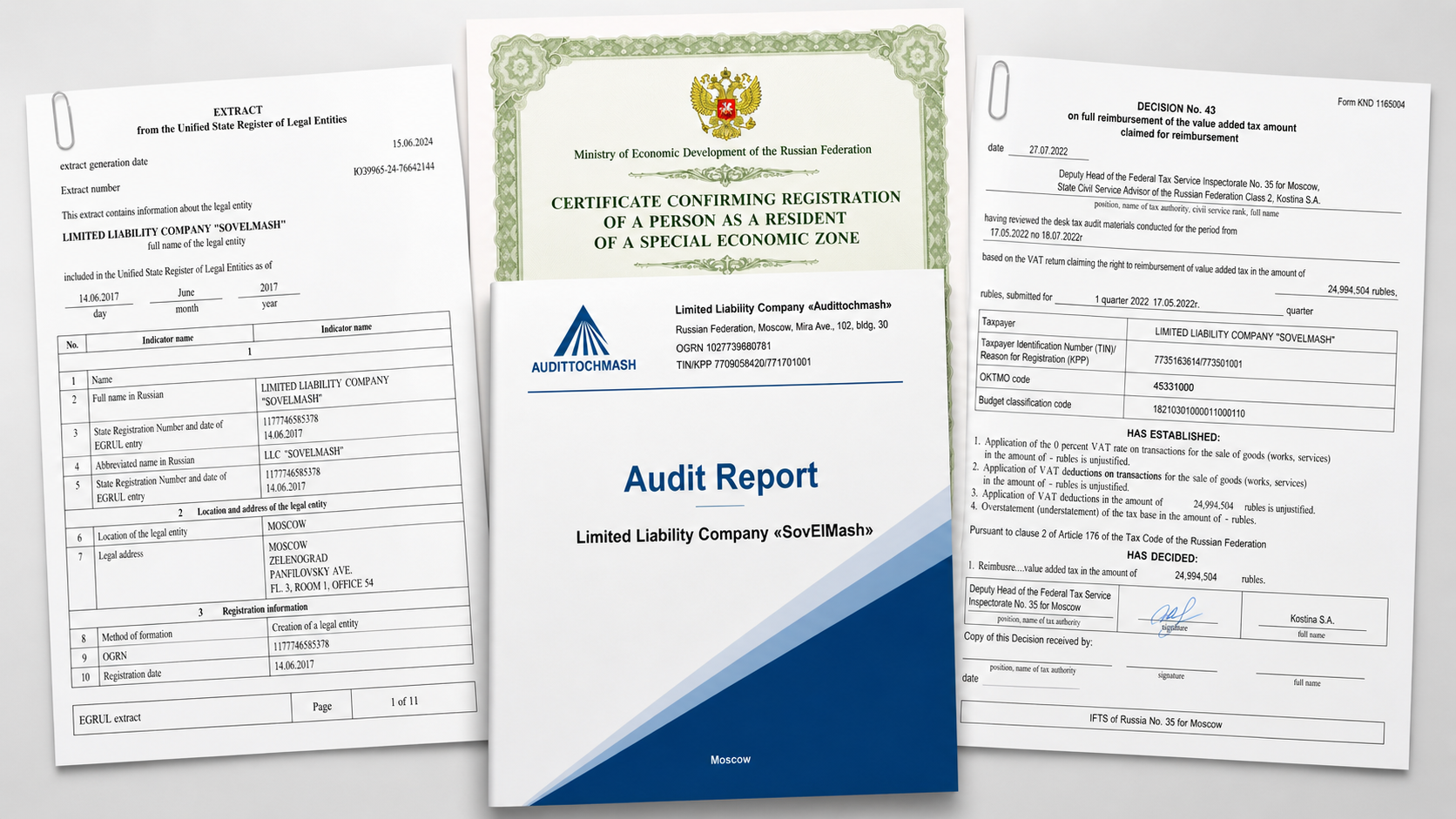
A pyramid scheme does not typically undergo five years of independent audit. A pyramid scheme does not typically receive VAT recovery rulings from the tax authority. A pyramid scheme does not typically operate from a state-residency address that other residents and public officials regularly visit.
“Every piece of primary documentation is publicly available. What is unusual is not the evidence. What is unusual is that the evidence exists at all.”
The Motor That Shouldn't Work
The first project — the one that has consumed most of the nine years and most of the capital — is, improbably, an electric motor.
More specifically, it is an asynchronous electric motor using a winding technology that the engineer Dmitry Duyunov calls Slavyanka. Duyunov has been working on this problem since 1995. His claim, defended across three decades of prototyping, is that a specific combination of windings — a parallel connection of star and delta configurations within the same stator — allows an asynchronous motor to reach efficiency classes previously associated only with synchronous ones, while remaining dramatically simpler and cheaper to manufacture.
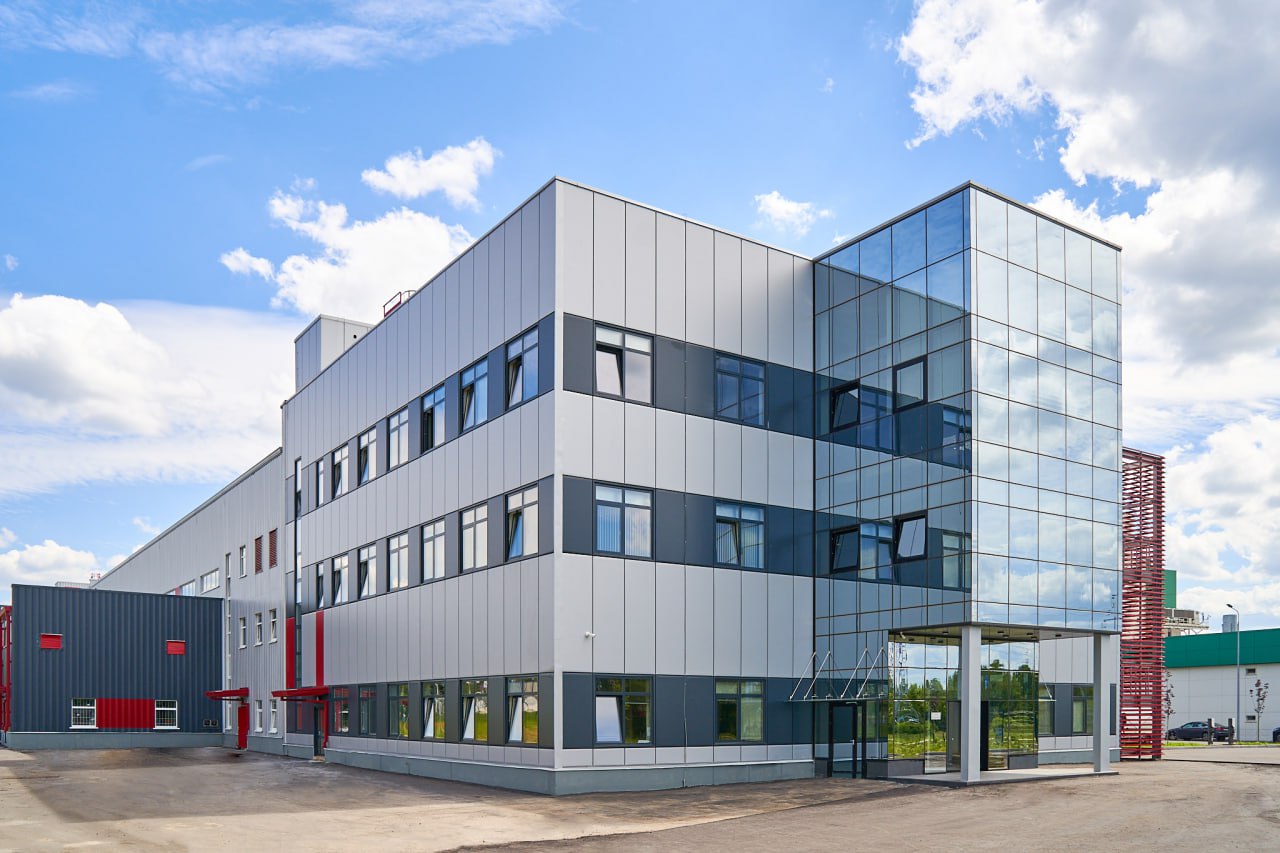
The production facility is a real building at a real address, covering 14,700 square meters — roughly the floor area of two football fields. It holds more than twenty units of modern machining equipment, including vertical machining centers KMT KVL 650 and KMT KVL 1000, a four-axis CNC center CNC4VMC850L with FANUC controls, and a BF-V6 three-axis vertical center. A climatic chamber rated from −50 to +150°C at 98% humidity sits in the testing laboratory. On the stamping line, the equipment outputs one motor core package every fifteen seconds.
Construction of the facility began January 21, 2021. The architectural-planning approval — known in the Russian construction code as AGR — was issued by the Moscow Committee on Architecture on August 14, 2025, under registration number 696-5-25/S. On August 23, 2025, construction was declared complete. On September 17, 2025, the federal construction supervisor Mosgosstroinadzor issued the Construction Completion Conclusion — document number 779-5-30, case file 45,190 — confirming that the built facility complies with the approved project documentation.
One document remains outstanding. The final operational commissioning permit — the separate approval required before full serial production — is still in process as of April 2026, delayed since Q4 2025 by procedural questions from the construction supervisor and by reassignment of leases within Technopolis Moscow. First test batches of angle grinders, built around the Slavyanka motor, are being produced at the facility. Serial commercial production awaits the final permit.
Five patents are currently moving through Rospatent, Russia's national patent office. The technology itself is already entered in the Russian Registry of Perspective Inventions. The model designation DAT-100L6 is cleared as not requiring separate Customs Union certification under TR CU 004/2011 — a routine but concrete regulatory step.
Across its four assumed market segments — hand power tools, traction motors for electric transport, industrial drives, and, notably, aviation engines — Sovelmash has begun its first confidential commercial contracts (October 2025). Two oil-and-gas customers have established working groups on potential motor applications. Conversations with potential industrial buyers in India have reportedly reached national leadership level. Further conversations are underway in China and in Europe.
“You can copy what exists, but you can't create the new until you understand it. That's a long process. We have 10 to 20 years.”
With the motor facility physically complete and first test production underway, the company did something that surprised even some of its own supporters. They started on a second, more improbable project.
The State Takes Notice
The pattern of Russian press coverage of the company is unusual.
The skeptic's expectation, given a story involving crowd-style fundraising and retail investors, would be coverage concentrated in lifestyle media, YouTube vlogs, and industry-press releases. What has actually happened is federal television. In July 2025, NTV — one of Russia's three main federal broadcast networks — carried a report on Sovelmash's motor work and on the AERONOVA airship program. In September 2025, Rossiya 1, the state's primary channel, aired a feature on the revival of airship technology referencing both projects. In November 2025, Yakutia 24 broadcast an exclusive from the Voskresensk airfield, where AERONOVA conducted public flights of its Aerolyot-01 prototype. In the same month, Izvestia — one of Russia's oldest daily newspapers — interviewed the company's representative at Dubai Airshow.
None of these outlets are affiliated with the platform. None of them are paid placements, to the author's knowledge. The cumulative effect, visible to any Russian-speaking observer, is a company that the Russian media establishment has decided is a legitimate industrial subject rather than a fraud story.
On December 22, 2025, TASS — Russia's state news agency — published that Russia's newly adopted ten-year concept for scientific and technological development of the transport sector includes the development of cargo and passenger airship technology through 2035. AERONOVA is not explicitly named in the TASS publication. But the regulatory framework it inhabits — and the Ministry of Industry license it would obtain four months later — sit squarely inside the direction the document describes.
Nine thousand kilometers to the south, in September 2025, the Ministry of Economy of Mozambique awarded Solar Group formal recognition as Best Innovative Foreign Company for its contribution to economic diversification. A foreign government, outside the Russian information space, found it worth the ministerial effort to name the company for the record.
And Then They Started Building Airships
AERONOVA — legally OOO AERONOVA, Moscow, Leningradskoe shosse 37-1, INN 7100032055 — officially launched as a project on March 4, 2025, though retail funding had already begun in August 2024. The engineering core is unusually deep for a young company: chief designer Dmitry Khmel (helicopter engineer, Moscow Aviation Institute, 40+ years in profession, candidate of technical sciences); chief designer of airships Vadim Zubkevich (Bauman, 40 years, former Google Loon, former chief designer of the AU-30 airship); design bureau head Boris Ivchenko (Bauman, academician of the Academy of Aviation and Aeronautics); technical director Fyodor Konstantinov (MSTU Stankin, former Chief Technologist of the Angara launch vehicle at Khrunichev). Institutional partners: Bauman Moscow State Technical University, under a signed contract on the NOVA-2 gondola design; MAI, for the turbine engine calculations; the Dolgoprudny Design Bureau of Automatics, for shell materials; and the Northern research-education center in Yakutia, for Arctic conditions work.
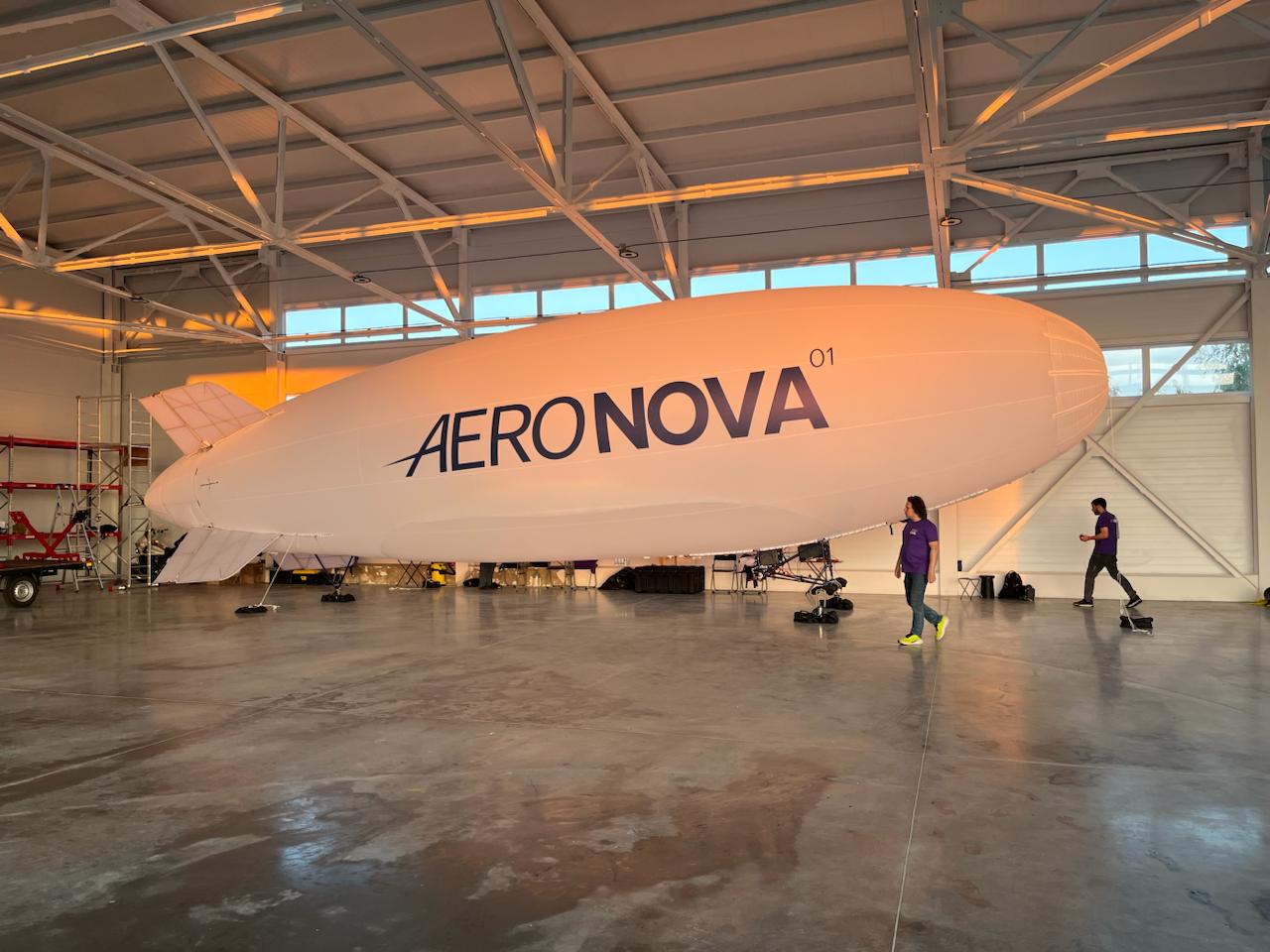
The flotilla so far: NOVA-01, a 130 m³ unmanned test vehicle, already flying — survived a shell rupture incident in September 2025 and was back under helium within 48 hours. Aerolyot-01, 188 m³ hybrid with four independently-controlled thrust motors (NOVA-01 has two), made its first full flight on January 23, 2026 — vertical take-off and landing, hover, maneuvering, full telemetry recorded. In development: NOVA-2, 2,000 m³, designed for 500 kg payload, 6 passengers, and a 500 km range, powered by a 200 hp Belgian-built petrol engine; three variants planned — passenger, unmanned cargo, aerial monitoring. Also active: NOVA-8, 8,000 m³, currently in configuration and mock-up phase. On the design board: NOVA-35, a rigid ten-tonne-cargo airship, 120 m long × 24 m diameter, 35,000 m³ volume — a 1:20 model is being assembled now. A parallel stratospheric program, led by Arkady Didkovsky from Bauman MSTU, has twice flown balloons to the upper stratosphere — 24.5 km for 84 hours in March 2025 (a Russian Book of Records entry) and 24,957 m (GPS peak) in August 2025 from a Rosaviation- coordinated launch site near Kirov.
In October 2025, a delegation from the Sakha Republic — Yakutia — visited the Voskresensk airfield in Moscow Oblast. The following visit produced a formal agreement to develop airships for the Russian Arctic, with applications in cargo logistics along the Northern Sea Route, forest monitoring, infrastructure safety, and tourism.
“They invited us in. ‘Come to Yakutia, build, create — we need this.’”
In November 2025, AERONOVA exhibited at Dubai Airshow— one of the three largest international aviation exhibitions in the world. The company's position was inside Vista, the Airshow's dedicated startup pavilion, among 120 aerospace startups from around the world. The company reports collecting over 300 contacts across three directions — buyers, partners, investors — with expressions of interest from representatives of the United Kingdom, Saudi Arabia, Egypt, India, China, South Korea, Madagascar, and Sri Lanka. International aerospace press coverage of Dubai Airshow 2025 concentrated almost entirely on the fighter-jet rivalry between Russian and Chinese stealth programs and on Boeing-Airbus commercial competition. AERONOVA was covered primarily in Russian-language media (Izvestia) and by Dutch television that visited the booth.
A start-up that was, according to multiple critics since 2022, incapable of ever clearing real aviation regulation had just cleared it.
The Parallel
In 2015, Sergey Brin — co-founder of Google, then roughly the fourth-wealthiest individual on earth, with a personal net worth hovering around $237 billion — founded LTA Researchin Mountain View, California. Its stated mission was to build modern rigid airships for humanitarian logistics and cargo transport. The company's flagship prototype, the 124-meter Pathfinder 1, received FAA Special Airworthiness Certification in September 2023 and conducted its first public flight over San Francisco Bay in May 2025, including a well-photographed pass near the Golden Gate Bridge that produced a brief wave of coverage in IEEE Spectrum, Wired, and SF Standard.
In 2024, a company funded not by a single billionaire but by a distributed network of approximately 88,000 ordinary retail investors began development of the same class of vehicle. In 2025, both airships were in the sky.
| Dimension | LTA Research | AERONOVA |
|---|---|---|
| Founded | 2015 | 2024 |
| Funding source | Sergey Brin's personal capital | Crowdinvesting + affiliate network |
| Flagship prototype | Pathfinder 1 (124 m) | NOVA-01, Aerolyot-01 |
| Next generation | Pathfinder 3 (180 m, under construction) | NOVA-35 (rigid, 10 tonnes cargo) |
| First public flight | May 2025 (San Francisco Bay) | 2025 (Voskresensk, Novinki airfields) |
| International exposure | FAA certification, US mainstream press | Dubai Airshow (Vista pavilion) |
| CEO | Brett Crozier (ex-US Navy captain) | Dmitry Khmel (chief designer) |
| Manufacturing base | Akron, Ohio (former Goodyear Airdock) | Moscow, Leningradskoe sh. 37 |
| Regulatory clearance | FAA Special Airworthiness | Ministry of Industry license, indefinite term |
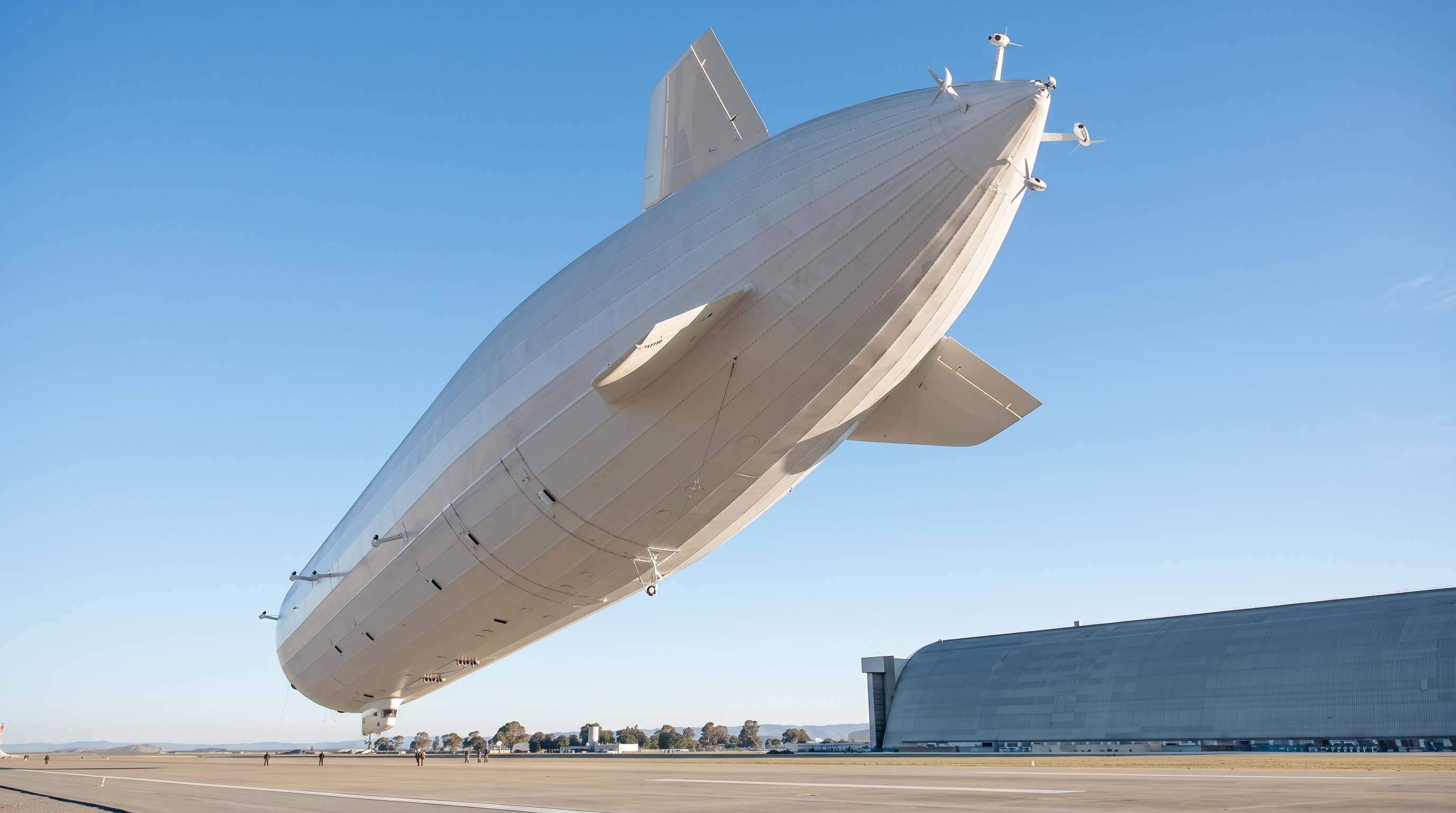
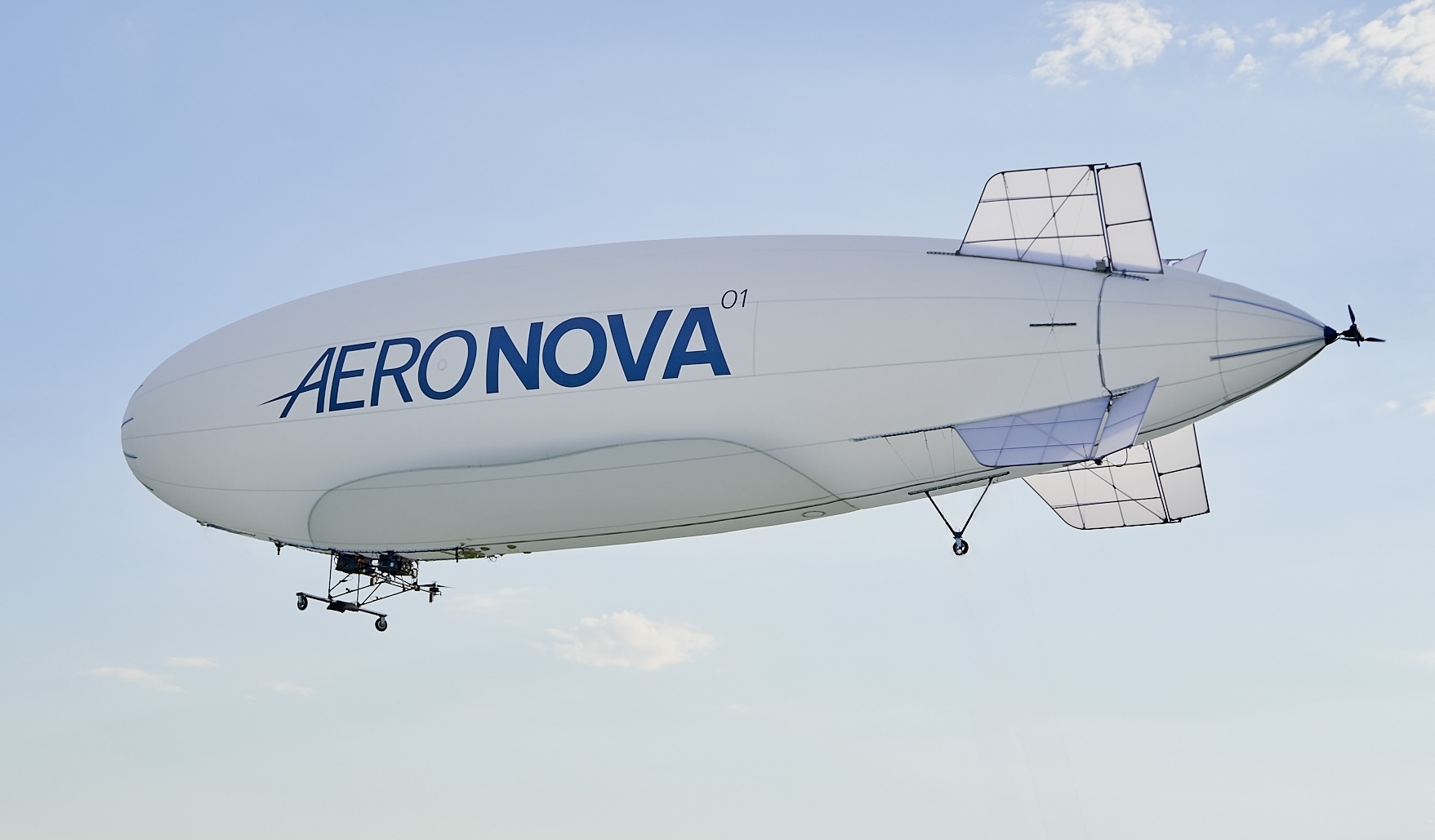
While Brin builds airships with his billions, AERONOVA builds them with the collective effort of tens of thousands of ordinary people. Different paths. Same sky.
The Global Crowd
The geographical distribution of the platform's investor base is not what most Moscow-centric analysts expect. Roughly 40% of investors are Russian-based. The remaining 60% live elsewhere — with Africa, not Western Europe, as the single largest concentration.
In 2025, Solar Group hosted a series of public conferences across five African markets. Johannesburg, June 28, drew over six hundred attendees. Abuja, July 5, planned for 100–150, received more than five hundred, with standing room only. Maputo, September 20, brought in over a hundred — and within the same month produced the Mozambique government's ministerial award. Additional conferences took place in Serbia and in Angola. The combined attendance across the five conferences was more than 1,400 people. In August 2025, the company also exhibited at FACIM, Mozambique's international trade fair.
On the product side, the story is smaller but more literal. During the African tour, a boat equipped with a Slavyanka motor conducted its first on-water test in Benin, with regional representatives Andrey Lobov and Gilles Weber present. The motor performed to specification.
In February 2026, a delegation of ranking partners from South Africa and Zimbabwe visited Russia. They toured Sovelmash in Zelenograd, visited the AERONOVA airfield, and watched NOVA-01 fly.
What the investor list demonstrates is not the usual story of capital flowing from the global West into a Russian project. It is the inverse: a Russian industrial project pulling capital from African, South American, and South Asian retail savers, in volumes that — while individually modest — cumulatively funded a 14,700 m² factory and a working airship program.
Meet the Skeptics
This would be an incomplete story without the critics, and the critics have had plenty to say. Across critical blogs and consumer-complaint sites from 2018 through 2024, the company has been called a financial pyramid, a scam, a fraud, and — most frequently — “just another MLM with shares instead of vitamins.” The charges deserve serious engagement rather than dismissal.
Below is a candid reckoning. The first row is the hardest.
| # | What skeptics said (2018–2024) | What is actually on record |
|---|---|---|
| 01 | "It's a multi-level referral scheme. That makes it a pyramid." | Partially true in mechanism. The platform does use affiliate-driven capital distribution, paying commissions to a network of regional representatives — more than $50 million disbursed over 8.5 years as affiliate compensation. False in outcome. A pyramid scheme does not typically end with a 14,700 m² factory floor, a Special Economic Zone residency status issued at a national investment forum, five consecutive years of independent audits, VAT recovery rulings from the tax authority, and a Ministry of Industry license with indefinite term. The model is better described as hybrid: multi-level affiliate distribution for capital acquisition, direct industrial equity for investors, executed under full Russian regulatory oversight. |
| 02 | "There's no real production." | Construction complete · ZOS № 779-5-30 · September 2025. First test production ongoing. |
| 03 | "They have no patents." | 19 patents filed across Sovelmash and its predecessor entity AS&PP. 9 active inventions (20-year protection) running through 2031–2040; 10 utility models expired per the 10-year rule. Technology entered in the Registry of Perspective Inventions. Core winding design additionally protected as a commercial trade secret. Full list with scans on the Patents page. |
| 04 | "They'll never clear real aviation regulation." | Ministry of Industry license Л007-00102-77/04708388 · April 1, 2026 · indefinite term. |
| 05 | "It's all polished visuals — fake building, fake production." | The record is traceable through documents and physical milestones. For Sovelmash: ZOS № 779-5-30, AGR № 696-5-25/S, public on-site photo/video record of the 14,700 m² facility in Zelenograd, delegation visits, and first test batches. For AERONOVA: Russian legal entity (INN 7100032055), Ministry license Л007-00102-77/04708388, public flight materials from Voskresensk airfield, and Dubai Airshow participation. This is a document-backed industrial footprint, not a render-only narrative. |
| 06 | "No international recognition." | Dubai Airshow 2025 participation. Mozambique government award. Yakutia government contract. |
| 07 | "Coming soon forever." | The timeline has already moved from "coming soon" to shipped milestones: factory built and running first batches, airship prototypes flying, Ministry license issued. The next step tied to first investor dividend distributions is full commissioning and serial-cycle ramp-up. |
| 08 | "No scientific publications." | Aspects of the technology are documented in Russian engineering literature; the company states selected papers have been published. Sovelmash holds an officially issued organization-developer code 'ВДРШ' (GOST 2.201) from FGUP Standartinform since September 2018 — placing it formally within the national engineering documentation system. The core winding design remains protected as a commercial trade secret. |
| 09 | "The number of investors dropped from 250K to 88K." | Total investors (all-time): 88,183. Total platform participants (including non-investing registrants): 583,000+. Critics conflated participants with investors. |
| 10 | "Deceptive marketing at presentations." | Subjective claim. Objective record: licensed, patented, audited, operational. |
“Every prediction skeptics made collapsed against a specific date and a specific document. The pattern is consistent enough to warrant a closer look at the model itself.”
The Russian Pattern
This is not a uniquely unusual story. Russia has produced a remarkable amount of world-changing technology over the past four decades. What makes Solar Group unusual is only the method.
Born Moscow, 1973. Co-founded Google in 1998. Now founder of LTA Research — the other airship company in this story.

Born Kiev, Soviet Union. Co-founded PayPal (1998), went on to lead Slide, Affirm, and HVF.
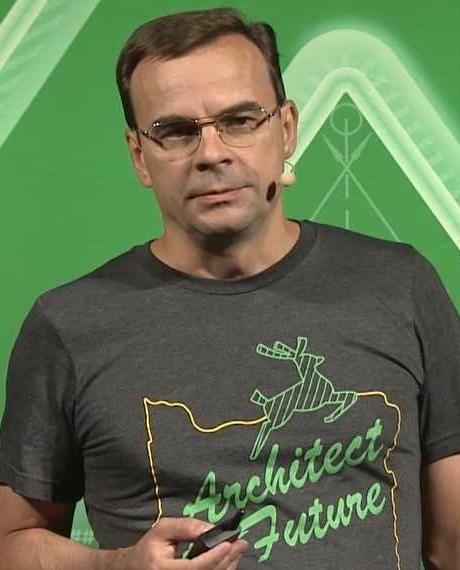
Wrote nginx, now handling roughly a third of the world's websites. Remained in Russia; sold to F5 in 2019.

Co-founded Telegram, now used by over 900 million people worldwide, while moving through successive jurisdictions.
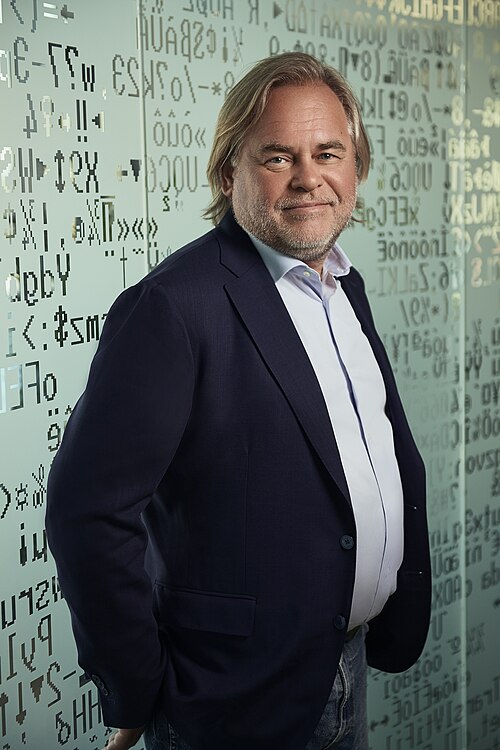
Built Kaspersky Lab from a Moscow office into one of the world's dominant endpoint security firms, operating in 200+ countries.
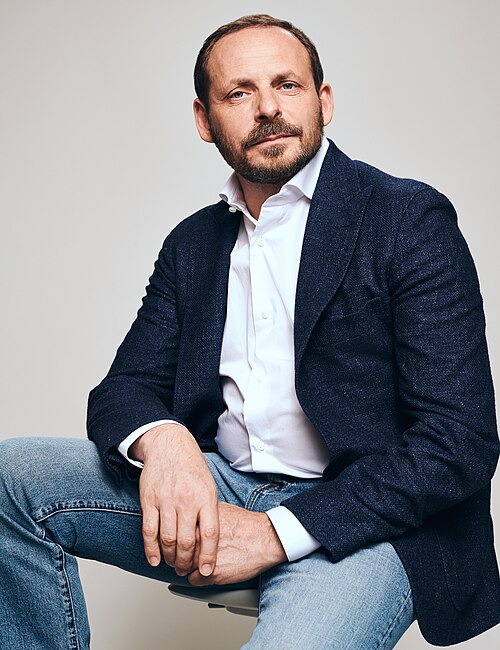
Co-founded Yandex, the Russian search and transportation technology company that at its peak rivaled Google's share in its home market.
The pattern is visible enough to be uncomfortable. Russians build world-altering technology. They usually do it either by leaving Russia, or by accepting Western venture capital into projects based elsewhere, or both.
What Solar Group is attempting is a third path: building industrial technology from Russia, funded by ordinary people from 194 countries, without venture capital, without emigration, without a Western exit. Just a factory in Zelenograd, an airship hangar on Leningradskoe shosse, and a ministry license on file. Whether the path scales, whether it survives contact with serial production challenges, whether the distributed investor base eventually sees cash returns on their stakes once the project companies go through equity conversion — none of this is determined yet.
The only thing that is determined is that the path has been walked, at least this far.
The Open Ending
In 2035 we will know whether this was the first industrial crowd-funded company in history to operate under full state regulatory integration — or a brief anomaly that could not scale past its founding cohort. The factory is physically built. The airship is airborne. The licenses are on file. The audits are public. Investors have waited almost a decade for the underlying project companies to complete construction and clear operational permitting; the value of their stakes will be determined by the coming years of commercial performance.
No investor has yet received a cash dividend return on the stake. The model is explicit about this: cash flow to the distributed investor base begins only after the project companies undergo asset valuation and share issuance, which is the next stage after operational commissioning.
The fair question is not whether this experiment succeeds financially for its investors. That takes a further five to ten years to answer. The fair question is:
What else might be quietly working, with documentation and a factory floor, that the venture-capital consensus isn't paying attention to — because it doesn't look like venture capital?